Quantum Fundamentals: NoTerm-2021
HW 6 : Due 2/26 Fri
- Histogram
S0 4111S
A beam of spin-\(\frac{1}{2}\) particles is prepared in the state:
\[\left\vert \psi\right\rangle = \frac{2}{\sqrt{13}}\left\vert +\right\rangle+ i\frac{3}{\sqrt{13}} \left\vert -\right\rangle\]
- What are the possible results of a measurement of the spin component \(S_z\), and with what probabilities would they occur? Check Beasts: Check that you have the right “beast.”
- What are the possible results of a measurement of the spin component \(S_x\), and with what probabilities would they occur? Check Beasts: Check that you have the right “beast.”
- Use Another Representation: Plot histograms of the predicted measurement results from parts \((a)\) and \((b)\). Your histogram should be a vertical bar chart with the value of the spin component on the horizontal axis and the probability on the vertical axis.
- Spin One Intro
S0 4111S
The OSP Spins Laboratory simulation can also be used to explore spin-1 systems. The components of spin for these systems can be measured to be:
\(\hbar\) (corresponding to the “+” port)
\(0\hbar\) (corresponding to the “0” port)
\(-\hbar\) (corresponding to the “-” port)
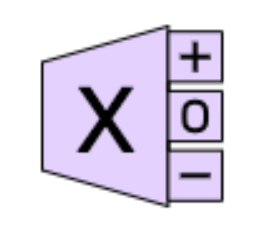
To switch the simulation to a spin-1 system, find the hyperlink about halfway down the page that says “Click here to switch”.
Draw and label a diagram of an experimental setup that would allow you to prepare a set of spin-1 particles to be in the \(|1\rangle_x\) state and than measure the \(z\) component of spin for these particles.
- Using the simulation, prepare a set of particles to be in the \(|1\rangle_x\) state and measure the \(x\), \(y\), and \(z\) components of spin of these particles. Draw probability histograms of the results for each spin-component-direction \(S_x\), \(S_y\), and \(S_z\).
- Spin One Half Unknowns (Brief)
S0 4111S
With the Spins simulation set for a spin 1/2 system, measure the probabilities of all the possible spin components for each of the unknown initial states \(\left|{\psi_3}\right\rangle \) and \(\left|{\psi_4}\right\rangle \). (Since \(\left|{\psi_3}\right\rangle \) has already been covered in class, please only do \(\left|{\psi_4}\right\rangle \) )
- Use your measured probabilities to find each of the unknown states as a linear superposition of the \(S_z\)-basis states \(\left|{+}\right\rangle \) and \(\left|{-}\right\rangle \).
- Articulate a Process: Write a set of general instructions that would allow another student in next year's class to find an unknown state from measured probabilities.
- Compare Theory with Experiment: Design an experiment that will allow you to test whether your prediction for each of the unknown states is correct. Describe your experiment here, clearly but succinctly, as if you were writing it up for a paper. Do the experiment and discuss your results.
- Make a Conceptual Connection: In general, can you determine a quantum state with spin-component probability measurements in only two spin-component-directions (for example, z direction and y direction)?Why or why not?
- General State
S0 4111S
Use a New Representation: Consider a quantum system with an observable \(A\) that has three possible measurement results: \(a_1\), \(a_2\), and \(a_3\). States \(\left|{a_1}\right\rangle \), \(\left|{a_2}\right\rangle \), and \(\left|{a_3}\right\rangle \) are eigenstates of the operator \(\hat{A}\) corresponding to these possible measurement results.
- Using matrix notation, express the states \(\left|{a_1}\right\rangle \), \(\left|{a_2}\right\rangle \), and \(\left|{a_3}\right\rangle \) in the basis formed by these three eigenstates themselves.
The system is prepared in the state:
\[\left|{\psi_b}\right\rangle = N\left(1\left|{a_1}\right\rangle -2\left|{a_2}\right\rangle +5\left|{a_3}\right\rangle \right)\]
- Staying in bra-ket notation, find the normalization constant.
- Calculate the probabilities of all possible measurement results of the observable \(A\). Check “beasts.”
- Use a New Representation: Plot a histogram of the predicted measurement results.
In a different experiment, the system is prepared in the state:
\[\left|{\psi_c}\right\rangle = N\left(2\left|{a_1}\right\rangle +3i\left|{a_2}\right\rangle \right)\]
- Write this state in matrix notation and find the normalization constant.
- Calculate the probabilities of all possible measurement results of the observable \(A\). Check “beasts”.
- Use a New Representation: Plot a histogram of the predicted measurement results.