Contemporary Challenges: Fall-2023
Homework 0 (SOLUTION): Due 2 Friday 9/29
- Planting Ideas for Your Term Project S1 4737S Read Introducing the term project carefully and start thinking of ideas for your term project. Be on the look-out for examples of rich-context problems in lecture notes and homework questions. [This problem is not graded].
- Introducing yourself to PH315
S1 4737S
This homework question is a chance to introduce yourself to the instructional team and practice uploading hand-drawn text/figures to gradescope.
- What name do you prefered to be called by? If you want, please share your pronouns.
- If the pronunication of your name is possibly confusing, can you describe how I should pronounce your name?
- Which physics classes have you completed (high school and university)? Are you taking any physics classes concurrently with this class?
- What major(s)/minor(s) are you considering?
- In this class, what is something you are looking forward to?
- What concerns do you have about this class?
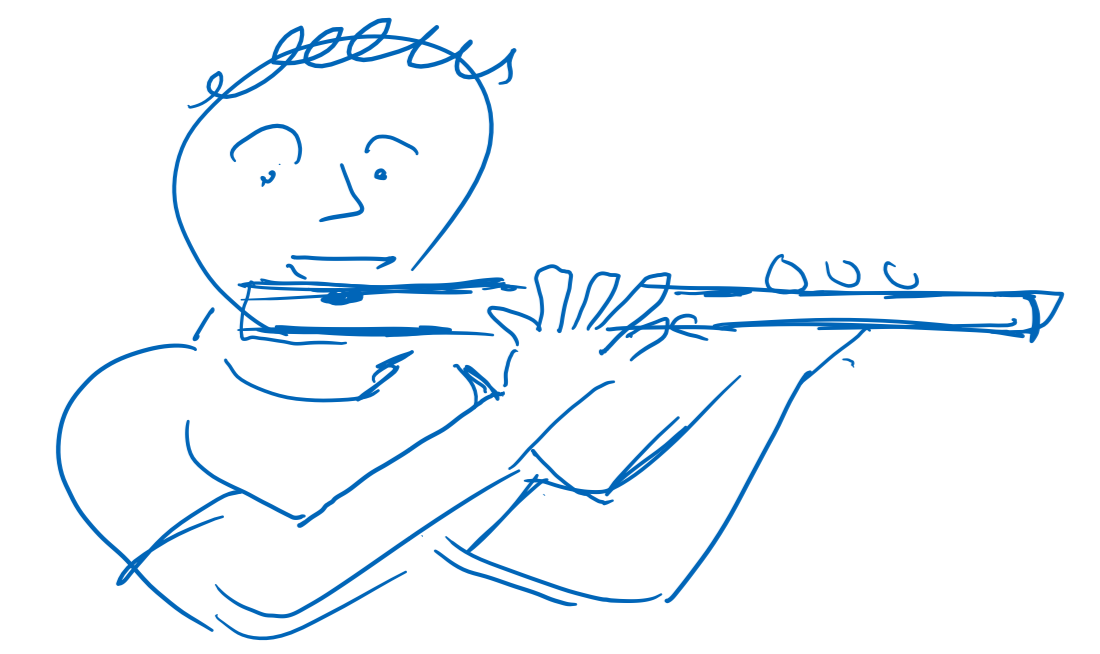
- Sketch a quick drawing/diagram representing a hobby/passtime/interest that you like to pursue. (Future HW problems will require drawing/diagrams, so this is a warm up)
- Scale reading assignment
S1 4737S
Read this 3 page excerpt from the book “Scale" by Geoffrey West (also available in plain text), then answer the following questions:
- When modeling the motion of a planet, what is a property of the planet we can ignore without causing significant error? Conversely, what is a property of the planet we cannot ignore if we wish to predict the planet's motion?
- This excerpt describes a “toy model” of a gas. The model is considered “coarse grained” because it ignores many fine-grained details. List one or more physical properties of gas molecules that the toy model ignores.
- Why do physicists use toy models and zeroth-order approximations?
- We can ignore the color of the planet, but we can't ignore the mass of the planet.
The kinetic theory of gases assumes that individual gas molecules don't occupy any volume (the model allows us to have a unrealistic number of molecules in a finite space). The theory is indifferent to the mass of each molecule, i.e. the predictions of the model are not affected by the mass of the molecule. The theory assumes the molecules don't stick to each other.
This list below highlights some properties and phenomena that the kinetic theory of gases does include
- The model assumes each "billiard ball" has momentum and kinetic energy.
- The model includes the pressure, temperature, volume and thermal energy of a gas. It makes predictions about the these variables.
- The model explains phenomena such as gas mixing. For example, red billiard balls could get mixed up with blue billiard balls.
- The toy model captures general physical principles in a satisfactory way. The model describes how one or more variables relate to each other. The model builds a foundational understanding upon which you might choose to build a more refined model.
- Gradescope instructions PH315
S1 4737S
Scan and upload your answers to Gradescope using the Gradescope tab in Canvas. You can use the scanner in Weniger 304F, or a scanning app on a cell phone, or make a pdf directly from a tablet computer; Gradescope offers advice and suggested apps at this URL. The preferred format is PDF. Photos or JPEG scans are less easy to read (and much larger file size), and should be used only if no alternative is available.
On Gradescope, you will be prompted to associate submitted pages with problem numbers by selecting pages on the right and questions on the left. You may associate multiple problems with the same page if appropriate. Remember, no more than 2 problems on one page.
If you have a problems with this process, please contact your instructor or teaching assistant.